
Think TPMS Think Autogem
At Autogem we have kept a watching brief on the more mature TPMS markets elsewhere. This has not only allowed us to provide the “Think TPMS Think Autogem” programme of today but also to ensure our customers are future proofed where possible for tomorrow’s technology.
This article is intended to explain the different technologies available and provide independent advice to those tyre installers considering different TPMS sensors for their business.

Seven Basic Principles
To understand programmable and universal sensors it’s important for us to remind ourselves of several basic principles.
1
2
3
4
5
6
7
Universal Sensors Can Come in Several Different Forms
Universal Sensors Can Come in Several Different Forms
Blank Programmable Sensors
Here a single sensor in conjunction with a compatible electronic tool can be programmed to speak many different protocols. These can also be programmed to replicate the existing ID code of the sensor being replaced, negating the need for any form of ECU reset.
The advantage of this type of universal sensor is the minimal stock holding required to have a wide on the shelf availability of sensors for different vehicles as they come in. As data is not stored within the initial ‘blank’ sensor a simple update of the electronic tool allows instantly improved coverage for this style of sensor.
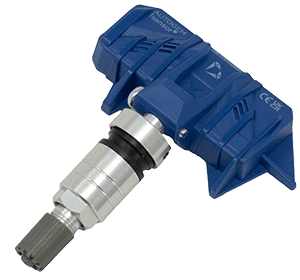
Autogem i-Sensor®
Hybrid Pre-programmed Multi-application Sensors
These sensors combine the features of a pre programmed sensor with some extra memory available to program new protocols into the sensor itself – like a programmable blank sensor. This way, assuming they have sufficient memory and the programming tool is up to date with the relevant coverage, they can work around their limitation in that new protocols can be added to the sensor post-manufacture. The sensors may or may not be reprogrammable in case of user error.
Like pre-programmed multi-application sensors you can expect to see multiple versions of these sensors as they are produced with different base coverage levels installed into each release.
Pre-Programmed Non OE Sensors
These sensors replicate OE sensors and have their own pre-set unique ID. The concept behind these is that in theory they work like an original equipment sensor but at a discounted price. In effect they have to be treated just like the comparable OE sensor, so if the vehicle cannot auto-learn new sensors, it will require an OBD reset using a compatible diagnostic tool. These are often referred to as 1:1 sensors since they are 1 to 1 replacements for the OE product.
As a collective these sensors can often be called ‘multi-sensors’ and dependent on the memory inside the sensor they can store varying numbers of protocols, ie you may need a varying number of sensor replacement bodies to cover the whole vehicle parc.
Differentiating Between Blank Programmable Sensors
Ability to Clone Sensor ID Codes
Coverage
Cost of Sensor
Number of Sensors Required
Obsolescence
New OE sensors often means new protocols- so what happens when a new sensor protocol comes to market?
Pre-programmed sensors have certain protocols stored within them at purchase and because these sensors are pre-programmed they will not immediately have any new protocols available to them. In future this type of sensor will either require an additional number of sensors or newer, more comprehensive generations of sensor to improve coverage. This may mean having stock of multiple sensors or possibly having older generations of sensors that cover a smaller percentage of the vehicle parc.
Blank sensors are often seen as being more future-proof as the required protocols are transferred to them from a tool which is carrying the database, which can be easily updated – the same blank sensor can be used with a newer, more comprehensive tool software.
Ability to Reprogramme Sensors
Simplicity of Process (Sensor/Tool)
Mobility
Cost of Programming Tool
Wireless vs Contact Programming
WAL & New TPMS Technology
Wireless vs Contact Programming
Is the sensor fitted with a quality internal battery and what is its expected battery life? Also is the sensor supplied in a ‘switched off’ state where it is not already using battery power?
Sensors that need wireless programming / activation will already be ‘switched on’ as they are on stand-by awaiting a signal to be sent to it for activation or to delete the unneeded protocols that may be in it – depleting their batteries whilst not even in use.
To save battery, some OE sensors are initially set to “Shipping Mode” – It is important that your TPMS equipment is capable of disabling this before the sensor will properly communicate with the vehicle.
Multiple solutions
As you can see, there are multiple solutions available for all the three types of universal sensor. At Autogem we are regularly offered different solutions from different sensor and equipment manufacturers. We take the time to assess the different products for their efficiency and effectiveness and this allows us to offer the correct products according to our customer requirements.
To this effect we have created a scoring system for the various different technologies we have been advised of, helping retailers understand the systems that they are being offered.
Please do speak to our experts for advice on any programmable solution you are considering.
General TPMS buying advice
TPMS is not simply a part number that is ordered and forgotten, we see it as a programme that requires a complete package of support services around it to ensure tyre retailers have the confidence to deal with whatever sensor related problems may be presented to them in their fitting bays and forecourts.
With more suppliers and systems entering the market, we have put together a check-list of key things you should be looking out for from your TPMS programme provider.
• What systems do they provide & how do these systems score in terms of functionality, cost, effectiveness & stock inventory etc.?
• Does the supplier offer a complete product portfolio?
• What level of technical support can be provided?
• What training can be provided and via what medium?
• What experience does the supplier have with the category?
• Does the supplier have access to / have knowledge of new technologies?

